
31 July 2026
Each month, we spotlight one piece of thinking from a senior leader in the WiM Africa community — an article, report, talk or point of view that genuinely adds to industry conversations.
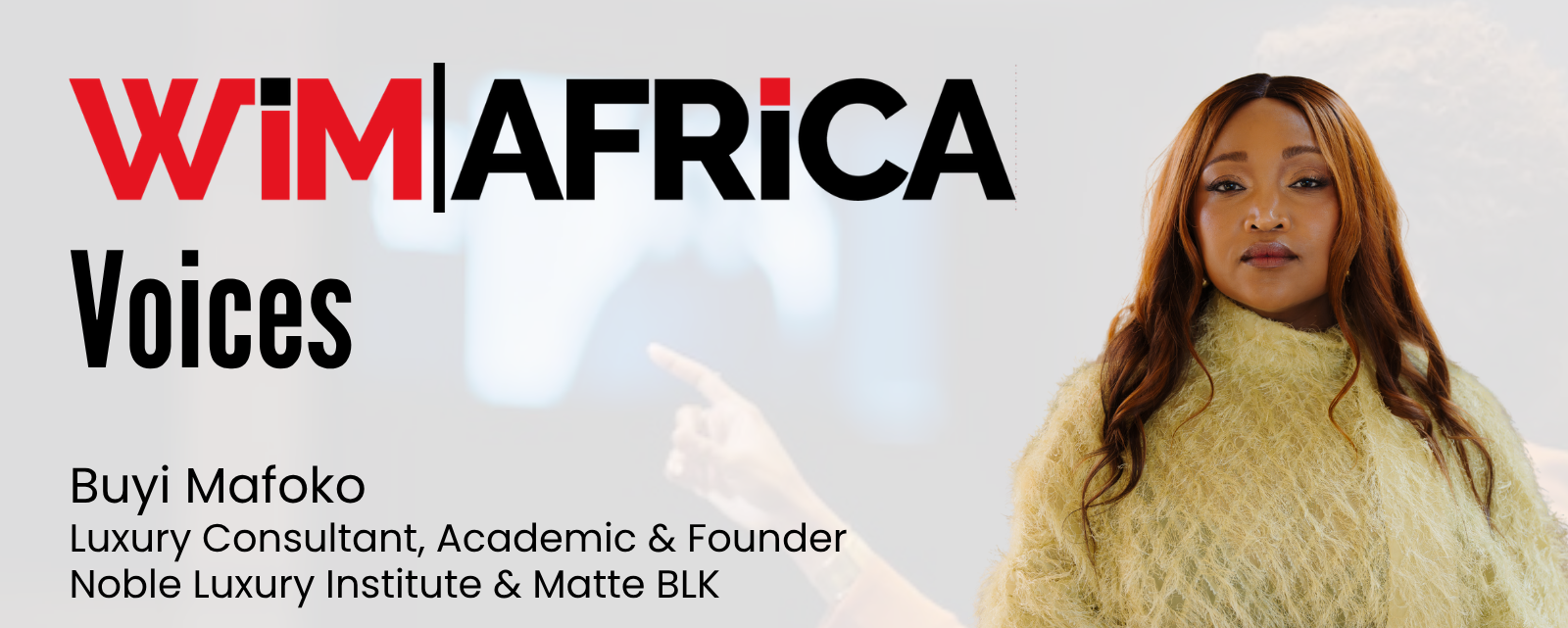
By Buyi Mafoko, Luxury Consultant, Academic & Founder, Noble Luxury Institute & Matte BLK
Africa has become one of the most talked-about growth markets in global boardrooms. The continent's population is expected to reach 2.5 billion people by 2050, with the world's youngest demographic profile and rapidly expanding urban centres. Yet despite the enthusiasm, many brands continue to make the same strategic mistake.
They still approach Africa as a single market. This is not simply a geographic misunderstanding. It is a commercial one. Africa's 54 countries represent different cultural systems, regulatory environments, consumer aspirations and value structures. What resonates in Lagos may fail in Nairobi. What creates desirability in Johannesburg may hold little meaning in Accra or Casablanca.
The brands that will win in Africa over the next decade will not necessarily be those with the largest budgets. They will be those that develop the deepest cultural intelligence.
The Rise of Cultural Capital
French sociologist Pierre Bourdieu argued that people do not consume products merely for functional reasons; they consume symbols, meanings and signals of identity. This concept of cultural capital has become increasingly important in Africa. Across the continent, consumers are becoming more confident in expressing identity through what they buy, where they travel, what they wear and the brands they choose to support. Consumption is increasingly tied to questions of heritage, community, representation and self-definition. This is particularly evident among younger affluent and aspirational consumers.
The rise of African fashion designers, local beauty brands, contemporary art, culinary movements and cultural tourism all point towards the same phenomenon: consumers increasingly seek products and experiences that reflect who they are, not simply what they can afford. For marketers, this changes the brief entirely. Growth strategies can no longer be built solely around income segmentation and demographic profiling. They require an understanding of culture as an economic driver.
Africa's Consumer Landscape Is Being Rewritten
The old narrative framed African consumers as price-sensitive and underdeveloped. The new reality is considerably more nuanced. Across sectors, consumers are displaying growing appetite for premiumisation, authenticity and experiences that create meaning.
In the beauty sector, consumers increasingly seek products rooted in indigenous ingredients and wellness traditions. In fashion, local craftsmanship and contemporary African design are becoming symbols of cultural confidence. In financial services, consumers increasingly favour brands that demonstrate social impact and community value. In luxury, wealth is often interpreted through legacy, entrepreneurship and collective advancement rather than individual accumulation.
At the Noble Luxury Institute, our work suggests that African consumers are increasingly driven by five interconnected forces:
These drivers are reshaping purchasing decisions across categories, from banking and telecommunications to beauty, hospitality and luxury.
AfCFTA Is Changing the Growth Equation
While culture is becoming increasingly important, policy and trade infrastructure are also reshaping the continent. The African Continental Free Trade Area (AfCFTA) is one of the most significant economic developments in modern African history. The agreement has the potential to create the world's largest free trade area by number of participating countries and could unlock billions in regional trade opportunities.
For marketers, the implications are profound. Reduced trade barriers and greater regional integration create opportunities for brands to scale across markets that have historically been difficult to access. For high-value sectors such as luxury, beauty, fashion and professional services, the opportunity is particularly significant. Research suggests that industries with high value-to-weight ratios and strong intellectual property potential stand to benefit disproportionately from improved trade facilitation and regional value chains.
However, trade frameworks alone do not create successful brands. Cultural legitimacy still matters. The winners will be organisations capable of combining scale with local relevance.
Women Are Building Africa's Next Growth Story
One of the most overlooked opportunities on the continent is the economic role of women. Women-led businesses account for a substantial share of intra-African trade, particularly in sectors such as food, beauty, fashion and retail. Yet women remain underserved by financial systems, logistics infrastructure and investment networks.
For business leaders, this presents an important strategic question: Are you merely marketing to women, or are you building economic ecosystems with them? The distinction matters. Brands that create genuine partnerships with women as entrepreneurs, distributors, retailers, creators and strategic partners build deeper trust and more resilient market positions. In Africa, relationships remain one of the most valuable forms of capital.
What This Means for Marketing Leaders
The strategic implications are increasingly clear.
Think in corridors, not countries: Regional blocs such as ECOWAS, SADC and the East African Community (EAC) increasingly function as integrated economic ecosystems
Invest in cultural intelligence: Consumer research should include anthropology, behavioural insights and cultural understanding, not just demographics
Build local partnerships: Communities, women-led enterprises, creators and local distribution partners are sources of competitive advantage
Pay attention to policy: Trade frameworks, creative economy initiatives and institutional developments increasingly shape market opportunities
Create with Africa, not simply for Africa: The brands that endure will be those that see African consumers as collaborators and co-creators of value
The New Competitive Advantage
The future of growth in Africa will belong to organisations capable of understanding a simple truth: Culture is not a soft variable, it is an economic asset.
For global brands entering Africa and African businesses scaling across borders, the next decade will require a different kind of leadership—one that combines commercial discipline with cultural curiosity. Because in Africa, market share increasingly follows cultural relevance. And cultural relevance begins with understanding that the continent is not simply a market to enter. It is a set of living, evolving ecosystems that are redefining what value means in the global economy.
-----
ABOUT THE AUTHOR
Buyi Mafoko is a Luxury Consultant, Academic and founder of the Noble Luxury Institute and Matte BLK agencies. She holds an MSc in Luxury Brand Management from the British School of Fashion and is currently undertaking doctoral research focused on developing a culturally grounded framework for African luxury consumption and value creation.
For any consultation enquiries